Indian aromatics, distilled at source

The scents that define
saanjh.

Six candles. Each made from aromatics sourced and distilled across India — Kannauj, Thanjavur, Hojai, Idukki, the Nilgiris, Wayanad — blended where one scent needs another.

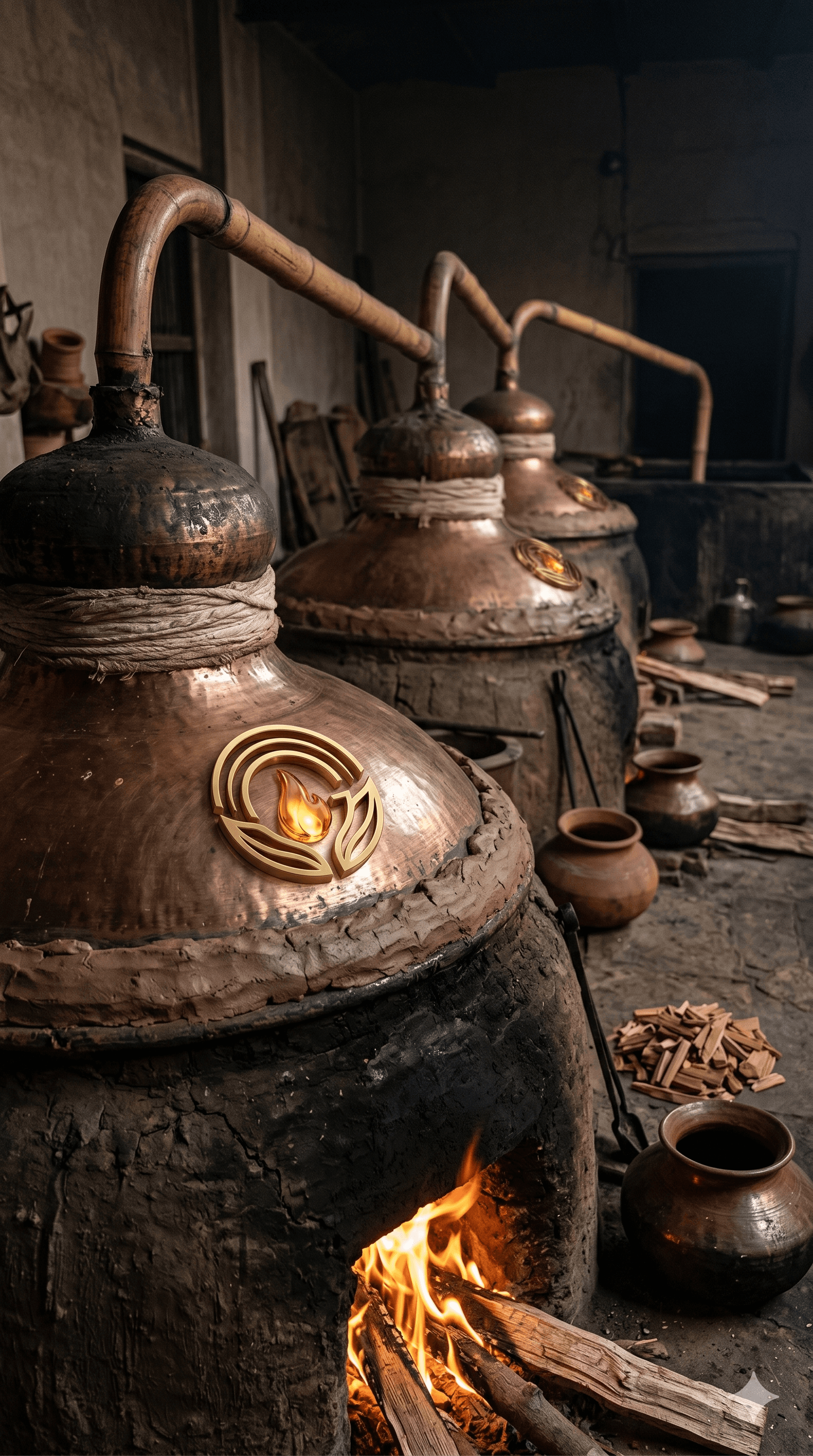
Copper Deg stills over wood fire in a Kannauj distillery — the same method used for four hundred years

400 years of patience in every drop

In the heart of Kannauj, the Deg-Bhapka method has not changed since the 1600s. Copper stills, river clay seals, a slow wood fire. It is not manufacturing. It is alchemy.

Kannauj Rose — Kannauj, Uttar Pradesh
Kannauj, Uttar Pradesh

Kannauj Rose

कन्नौज गुलाब

A royal accident that became the soul of Indian perfumery.

Rose Attar over Sandalwood base·2,990·55–60 hours burn

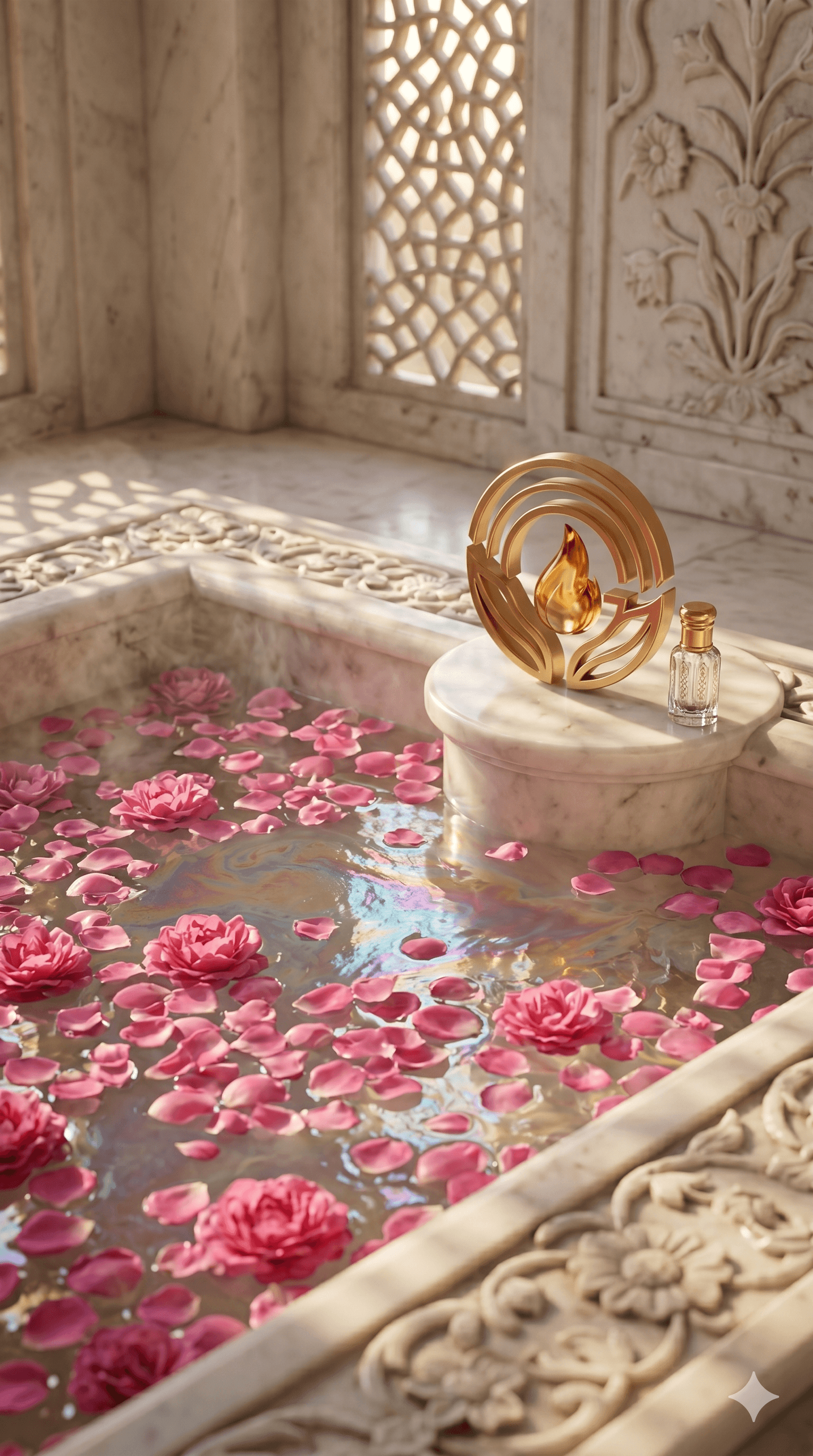
The story begins in a Mughal garden, sometime in the early seventeenth century. Empress Nur Jahan is bathing in a marble basin filled with rose petals — a common indulgence of the court. But on this particular morning, she notices something on the surface of the water: a thin, shimmering film of oil, released by the petals in the warmth. She has the oil collected. It is the first recorded instance of what will become Ruh Gulab — the soul of the rose.

Four hundred years later, the distillers of Kannauj still extract rose essence the same way the Mughal perfumers did. Before dawn, when the dew is still on the petals, the pickers move through the fields of Rosa damascena by hand — jute bags, no machinery. The petals go into copper Deg stills within the hour. Steam rises through them, travels through bamboo pipes, and is captured in clay Bhapkas submerged in water. The condensate drips, slowly, into a base of Mysore sandalwood oil.

The sandalwood is not a filler. It is how attar has always been made. The wood holds the rose, slows its evaporation, and gives it a warm throw that lasts hours after the flame is out. This is why our Kannauj Rose carries a sandalwood base — not because we added it, but because the tradition demands it.

Fifty thousand kilograms of petals yield barely ten millilitres of pure attar. The molecules that survive this journey — phenylethyl alcohol, citronellol, geraniol — are the ones responsible for that sweet, honey-like depth that synthetic rose cannot replicate. What remains in the candle is not a perfume. It is a room that remembers a garden at first light.

Top noteFresh damask rose petals, citronellol
Heart noteDeep rose absolute, geraniol
Base noteMysore sandalwood fixative, warm musk

How it is made

Rosa damascena petals, hydro-distilled by the Deg-Bhapka method into a Mysore sandalwood oil base. The sandalwood acts as a natural fixative — it prevents the delicate aromatic molecules from evaporating too quickly at candle-flame temperatures, preserving the hot throw. No solvent extraction, no synthetic fixatives. Approximately 50,000 kg of rose petals per 10 ml of pure attar.

Thanjavur Vetiver — Thanjavur, Tamil Nadu
Thanjavur, Tamil Nadu

Thanjavur Vetiver

तंजावुर वेटिवर

Nature's original air conditioner. The root that cooled palaces.

Vetiver Essential Oil·2,490·50–55 hours burn

Long before electric fans, long before air conditioning, the summer palaces of India had vetiver.

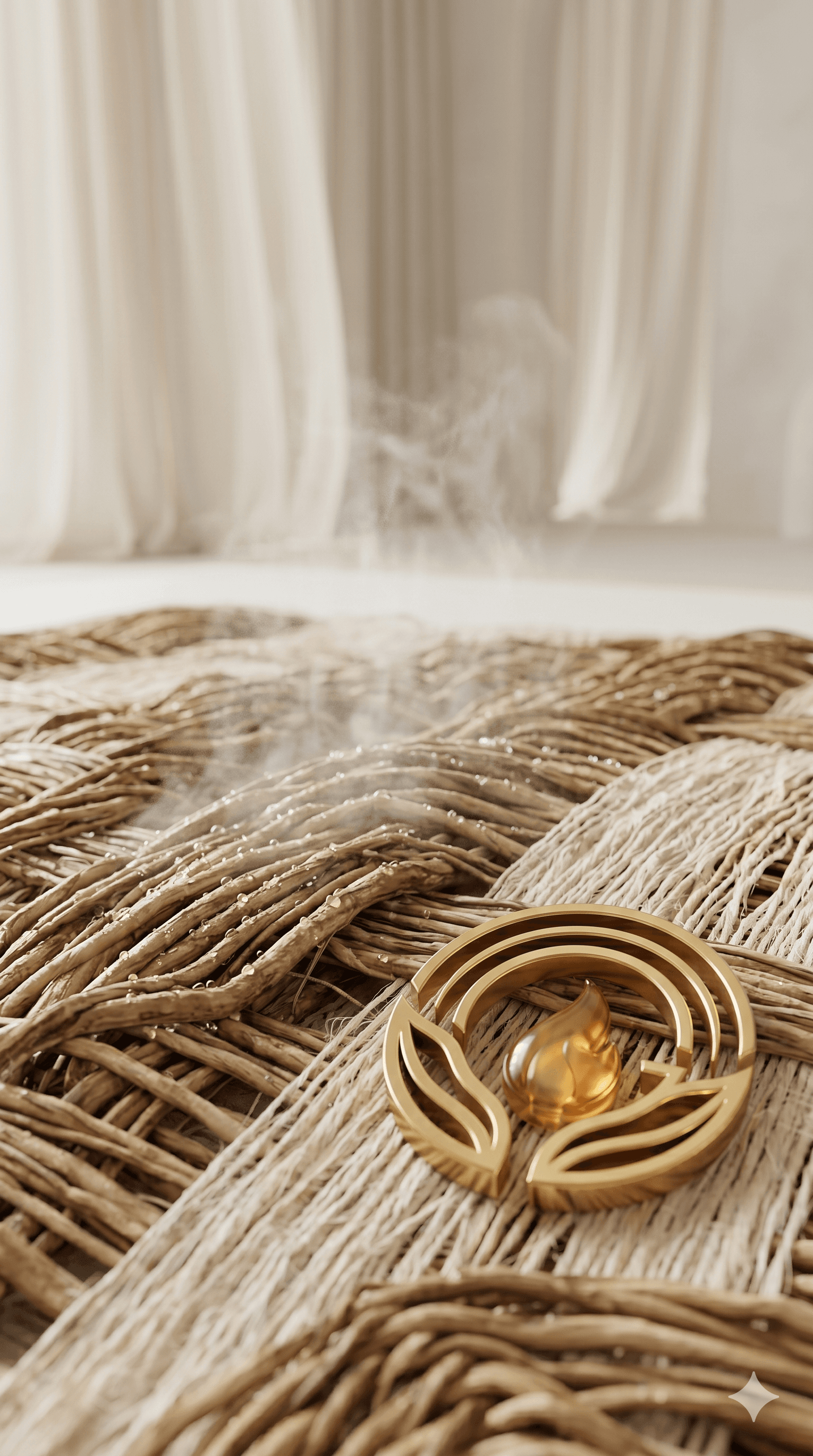
The roots of Vetiveria zizanioides — known locally as khus — were woven into thick mats, hung in doorways, and splashed with water. As the dry summer wind passed through, it picked up the scent of the wet roots and carried it through the rooms: dark, green, earthy, cool. It was not fragrance for its own sake. It was architecture. The scented chill of a building designed around a plant.

The vetiver grass of Thanjavur grows along the banks of the Cauvery delta, its roots reaching two metres into the sandy-loam soil. The tropical humidity and the alluvial earth concentrate sesquiterpene compounds in the root system — the molecules that give vetiver its dark, balsamic weight. When those roots are washed, dried, and steam-distilled, they release an oil that smells like the earth after the first monsoon rain.

In a candle, vetiver works as a structural tether. It holds the more volatile floral and citrus notes in place, keeps them from disappearing in the heat of the flame. If sandalwood is the anchor, vetiver is the foundation. It sits underneath everything, quiet and grounding.

This is the scent of a room that feels lived in. Of a table set for the evening. Of the hour when the light goes amber and the day begins to slow down.

Top noteFresh green earth, rain
Heart noteSmoky vetiver root, dark loam
Base noteDeep earth, wet stone

How it is made

Vetiveria zizanioides roots, harvested after 18 months of growth in the Cauvery delta's sandy-loam soil. Sun-dried, then steam-distilled in small batches. The high sesquiterpene concentration gives Thanjavur vetiver its characteristic smoky-sweet, balsamic profile — distinct from Haitian or Javanese varieties.

Hojai Oud — Hojai, Assam
Hojai, Assam

Hojai Oud

होजाई ऊद

Beauty born from resilience. The tree that turns its wounds into gold.

Agarwood Absolute·3,900·55–60 hours burn

Oud does not grow. It is earned.

The Aquilaria tree stands in the dense, humid forests of Hojai in Assam — unremarkable to look at, thin-barked, ordinary. It can live for decades without producing anything of note. But when the tree is wounded — by fungus, by insects, by the slow stress of the forest — something changes. The heartwood begins to produce a dark, dense resin as a defence. Over years, the resin saturates the wood, turning it from pale and light to heavy and nearly black.

That resin is oud. The most expensive aromatic raw material in the world.

The distillers of Hojai have been extracting oud oil for generations. The infected heartwood is chipped, soaked, and steam-distilled — a process that can take days for a single batch. What emerges is an oil that is bold, smoky, and deeply complex: leather, earth, dark honey, a faint sweetness that only reveals itself hours into the burn.

In candle-making, oud behaves unlike any other aromatic. Its scent profile evolves continuously as the wax melts — the opening is smoky and assertive, the middle reveals a warm resinous heart, and the base settles into something almost sweet. A single candle tells three different stories depending on when you enter the room.

This is not a scent for every evening. It is a scent for the evenings that matter.

Top noteDark smoke, leather
Heart noteResinous oud, animalic warmth
Base noteDeep wood, amber, earth

How it is made

Aquilaria heartwood from the forests of Hojai, Assam. The resin-saturated wood is chipped and steam-distilled in small batches over several days. Oud oil is the most complex aromatic in our collection — its scent profile evolves continuously across top, middle, and base notes as the candle burns. Sourced from managed plantations to ensure sustainability of the Aquilaria species.

Idukki Cardamom — Idukki, Kerala
Idukki, Kerala

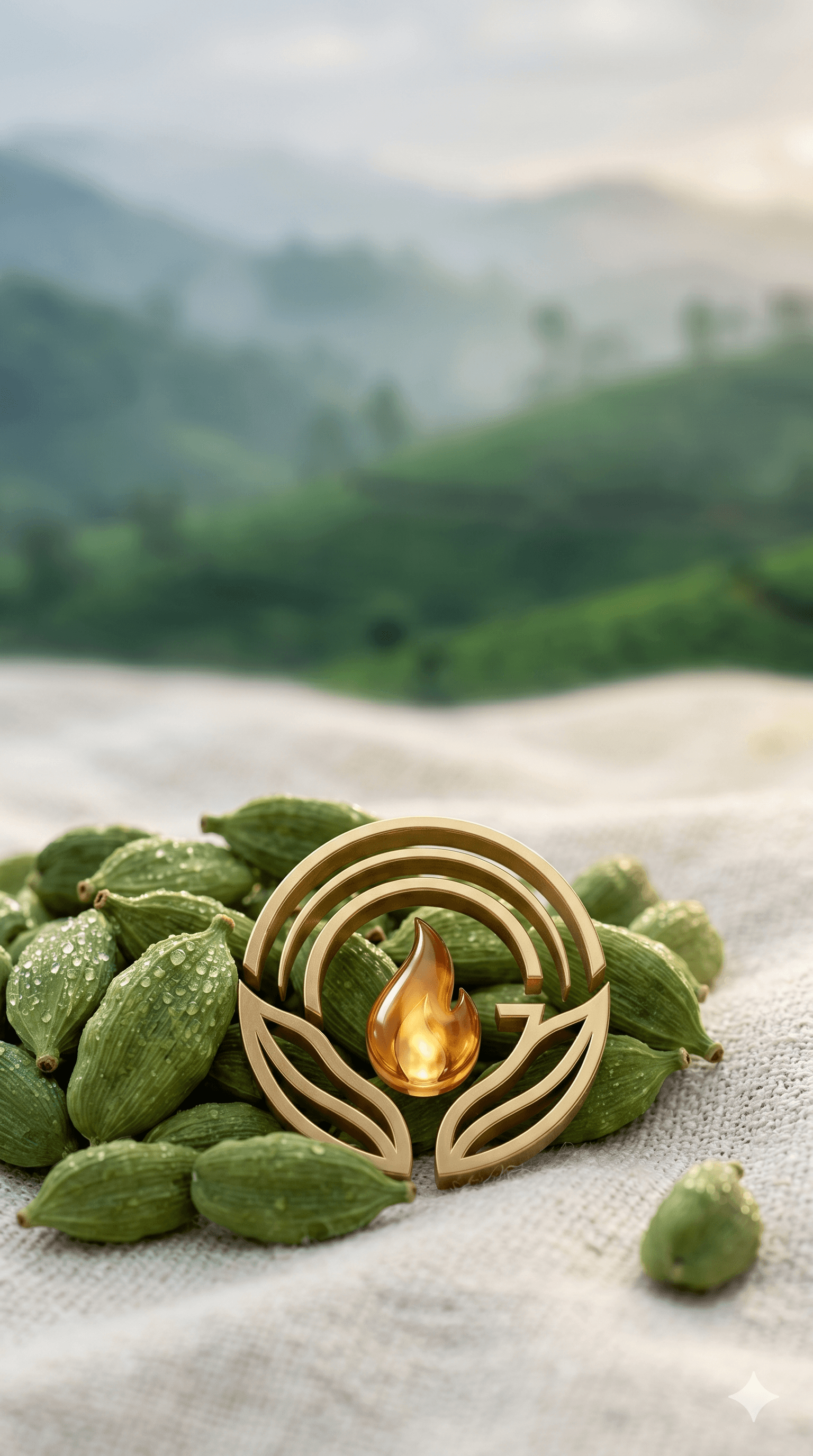
Idukki Cardamom

इडुक्की इलायची

The Queen of Spices. A Kerala dawn in your room.

Cardamom Absolute·2,690·50–55 hours burn

There is a tradition in Kerala that predates any brand, any marketing, any social media strategy. When a guest arrives at your home, you offer them something with cardamom. A chai. A sweet. A glass of water with a crushed pod. It is the spice of welcome.

Idukki sits in the Western Ghats at an elevation where the air is always cool and slightly damp. The cardamom grows in the shade of taller trees — Elettaria cardamomum, the green cardamom, what the spice trade has called the Queen of Spices for centuries. A crop that cannot be rushed or mechanised. Each pod is hand-picked at peak ripeness, when the seeds inside are just turning black and the essential oil content is at its highest.

The absolute extracted from these pods carries a cool-spicy brightness that cuts through a room the moment the candle is lit. In fragrance terms, cardamom is a top note — it is the first thing you notice, the opening statement, the scent equivalent of walking into a kitchen where someone has just made something for you.

At 15 to 20 percent of the fragrance load, cardamom provides that clean, aromatic clarity before the warmer heart and base notes emerge. It is the spark. The other scents — the sandalwood, the vanilla, the deeper resins — carry the flame. But cardamom lights it.

We use 8mm Bold grade from the Idukki hills, Alleppey Green Extra Bold. It is the scent equivalent of a chai that someone made for you, not one you made yourself.

Top noteBright cardamom, cool spice
Heart noteWarm spice, cinnamon bark
Base noteVanilla, sweet resin

How it is made

Elettaria cardamomum pods, hand-harvested at peak ripeness from shade-grown plantations in the Idukki hills (8mm Bold grade, Alleppey Green Extra Bold). Solvent-extracted to produce absolute — preserving the full aromatic complexity that steam distillation would lose. Cardamom absolute sits at 15–20% of the fragrance load as a top note.

Indian Geranium — Nilgiri Hills, Tamil Nadu
Nilgiri Hills, Tamil Nadu

Indian Geranium

जेरेनियम

The bridge note. Not rose, but something the room needs more.

Geranium Essential Oil·2,290·50–55 hours burn

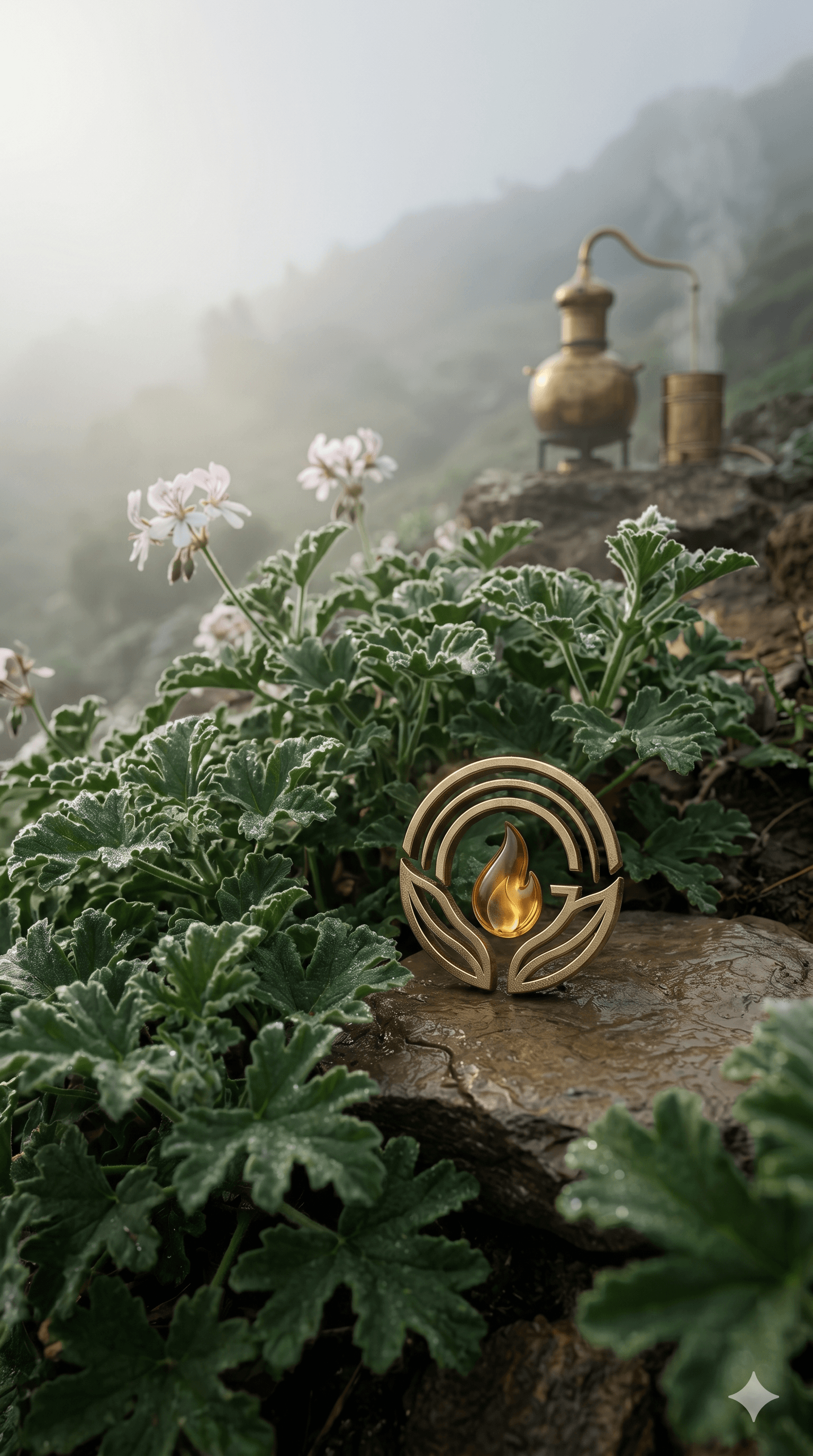
People often mistake geranium for rose. It is an understandable confusion — Pelargonium graveolens opens with a green, rosy brightness that shares some of the same aromatic molecules. But it is not rose. It is something lighter, more herbaceous, with a citrus edge that changes the air in a room rather than filling it.

The geranium of the Nilgiris grows on slopes where the morning mist keeps the leaves perpetually damp. The oil sits in the leaf itself, not the flower, and must be steam-distilled within hours of harvest before the volatile compounds begin to dissipate.

In the language of perfumery, geranium is a bridge note. It sits between the bright, fleeting top notes and the heavy, lasting base notes, connecting them without competing with either. A rose candle fills a room with presence. A geranium candle freshens a room with possibility. It is the difference between a room that has been dressed for guests and a room that has been opened for the morning.

Indian geranium — specifically from the Nilgiris — has a deeper, more herbaceous profile than its Egyptian or South African counterparts. Less sweet, more grounded. It does not try to be rose. It is comfortable being the scent that makes a slow morning feel intentional.

Top noteGreen leaf, citrus zest
Heart noteRose-like floral, mint
Base noteSoft herbaceous, gentle musk

How it is made

Leaves and stems of Pelargonium graveolens, steam-distilled within hours of harvest from the Nilgiri highlands. Added to soy wax at 60–65°C to preserve the delicate aromatic compounds. Indian geranium has a deeper, more herbaceous profile than its Egyptian or South African counterparts.

Wayanad Cinnamon — Wayanad, Kerala
Wayanad, Kerala

Wayanad Cinnamon

वायनाड दालचीनी

This is not a holiday candle. It is a Tuesday evening candle.

Ceylon Cinnamon, Kerala·2,490·50–55 hours burn

Most cinnamon candles use cassia — Cinnamomum cassia — because it is cheaper and sharper. It hits hard, fades fast, and leaves a slightly bitter aftertaste in the room. It is the scent equivalent of a shortcut.

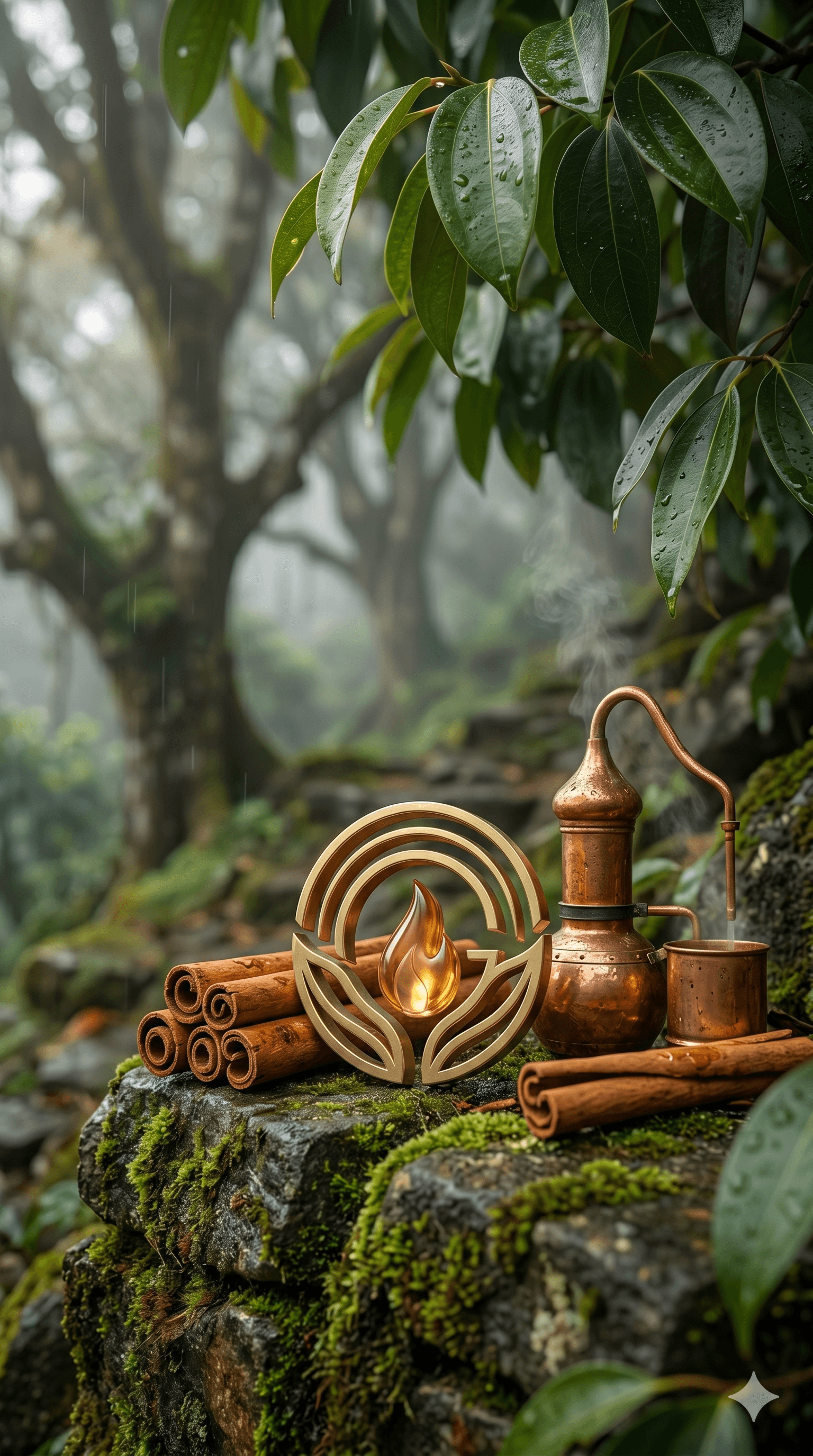
The cinnamon estates of Wayanad grow the other kind. Cinnamomum verum — true Ceylon cinnamon — with bark that is peeled by hand, dried in the shade, and distilled in small copper stills. What reaches the candle is a warmth that does not bite. Sweet. Round. With a honey edge that makes a room feel like someone has been baking all afternoon.

The difference is chemical, not just poetic. Ceylon cinnamon has significantly lower coumarin content than cassia, which makes it gentle enough to burn for hours without the scent becoming cloying or overwhelming. Cassia hits a ceiling. Ceylon just keeps going.

Cinnamon also has one of the lower flashpoints among essential oils, which means the temperature at which we add it to the wax matters. Too hot, and the delicate aromatic compounds burn off during the pour. We add it to soy wax at controlled temperature, preserving the full warmth.

This is not a seasonal candle. It is not for December. It is for the Tuesday evening when you come home, close the door, and want the room to feel like someone thought about you before you arrived.

Top noteWarm cinnamon bark, clove
Heart noteHoney, toasted spice
Base noteAmber, dried fruit, vanilla

How it is made

Inner bark of Cinnamomum verum, hand-peeled and shade-dried on the Wayanad estates. Steam-distilled in small copper stills. Lower coumarin content and a softer, sweeter profile than cassia. Added to soy wax at controlled temperature — cinnamon's lower flashpoint requires careful thermal management during the pour.

From the distilleries of India

The world's most refined aromatic distilleries remain in India — unbranded, while customers pay six to eight times more for imports. Saanjh changes that.

Kannauj RoseKannauj, Uttar Pradesh
Thanjavur VetiverThanjavur, Tamil Nadu
Hojai OudHojai, Assam
Idukki CardamomIdukki, Kerala
Indian GeraniumNilgiri Hills, Tamil Nadu
Wayanad CinnamonWayanad, Kerala

Arriving soon

Hand-poured in Bengaluru by Usha.

Leave your email. We will reach out before the candles are ready — no noise in between.